This story is inspired by the works of C.S. Lewis, particularly The Great Divorce, which I had just read when the idea for this story came to me. The question that sparked the idea was this: “What would it be like if we really knew what people think of us?” This is not a pure allegory, but some aspects of it are. I hope you enjoy it, and I hope it makes you think. Stay tuned for Part 2! If you’d like to know whenever I publish a new blog post, feel free to subscribe to my email list.
Part 1: The Queue
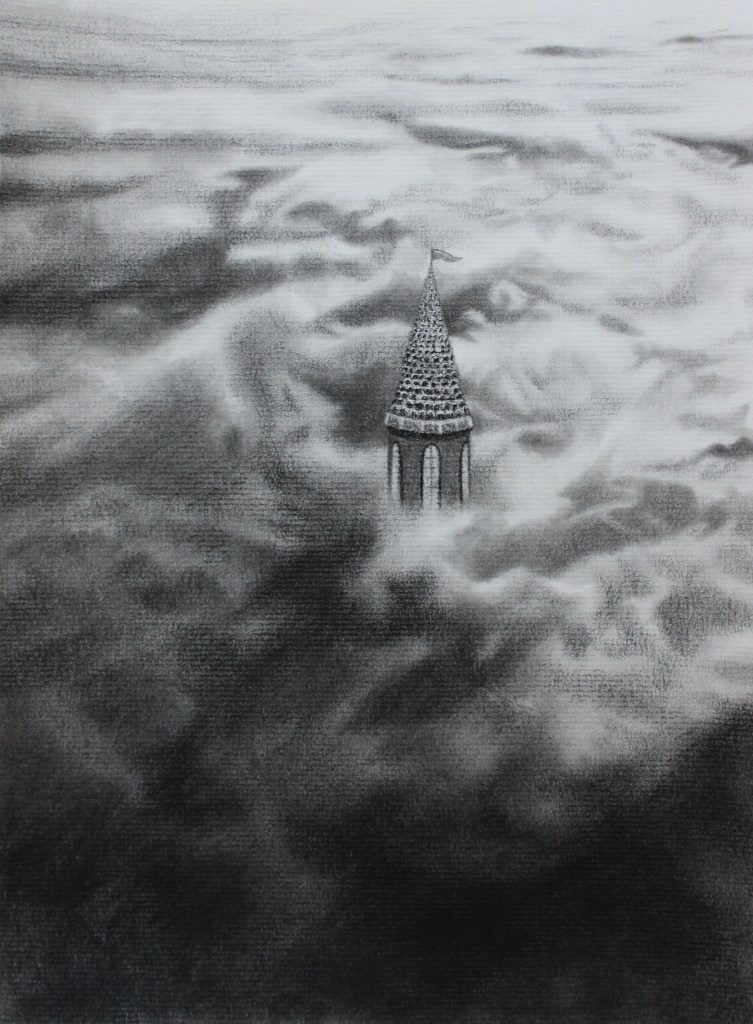
In the town where I lived there was a tower which stood far above the other spires and roofs which surrounded it. Day and night a queue of people streamed from its door, waiting rather impatiently to enter and behold some great secret within. Strangely, they were never seen coming out again. Yet still the queue continued, ever lengthening as citizens flocked to the tower to wait their turn. Eventually the line wound all the way across town, between shops and churches, around fountains and potholes, through gardens and parks. I could not contain my curiosity any longer.
“Sir,” said I to a portly gentleman in a waistcoat, who stood tapping his foot behind some four or five hundred people in line, “could you tell me what all this fuss is about? What is everyone waiting for? What secret lies in the tower?”
His eyes narrowed at me, and he scoffed. “Why, what a ridiculous question! Nobody knows what’s in the tower. We only know that it is something of great value, something with such power that it can change your very soul, and anyone who beholds it will never be the same.”
Naturally, I decided to get in line. I turned away from the portly gentleman and began my way to the back of the line, which I found straggling along in someone’s backyard on the edge of town.
For a full day I waited, and I came to understand why everyone seemed so irritable; half out of my mind I was with boredom, weariness, and hunger. I nearly abandoned my place in the queue several times, but always some inexplicable urge stayed my feet, and I shuffled ever onward.
As I drew nearer and nearer to the tower, the desire to see what was inside pressed upon my heart like a vice. Eagerness and impatience clawed at me, and I found myself pushing and shoving and jostling along with the rest of them, straining my eyes and craning my neck to see beyond the heads of those in front of me.
Finally the door was in sight—a great, looming archway at the bottom of the tower, with guards stationed on either side. A commotion seemed to be happening around it, for I could hear shouting, which increased in volume the closer I came to the front of the line. Soon I could make out the words:
“Stop! Turn back now, before it’s too late!”
“It’s all a great trick! It’ll ruin you! Now’s your chance!”
Several people were clustered near the front of the line, pleading with the citizens about to enter the door. They seemed to be protesting our entrance to the tower. As I watched, one of them clutched the shoulders of the man first in line, looking desperately into his face.
“Listen to me! Don’t sign it! Don’t enter! Go back home!”
“Come off of it, you spoilsport!”
The second man in line gave the protester a good shove, and he stumbled backward.
“Just because you’re too stodgy to join doesn’t mean you must try to keep the rest of us out. Go mind your own business!”
“But—” sputtered the protester. He wiped his face with the back of one hand, and two tears spilled from his eyes and ran down his cheeks.
The first man in line had passed through the door, and the second stepped up in his place.
“Sign here,” said an important-looking man in a uniform. As he said it he thrust a clipboard before the second man’s nose.
Hastily the second man scribbled down his name, then, with one last haughty glance at the protester, he stepped over the threshold and disappeared from view.
“How can you let these people do this?” said the protester.
“What on earth do you mean?” the important man answered stiffly. “We are giving all of these people exactly what they want. Aren’t we, now?” he called out, waving his arm, and the people in line who could hear him hollered and cheered in response.
“They don’t know what it is they want,” replied the protester.
“That doesn’t mean they don’t want it.” The important man straightened his jacket. “Next!”
One by one the line moved up, and one by one the protester pleaded with us not to enter the tower. I felt quite uncomfortable by the time he reached me.
“Please, don’t sign the paper,” he begged.
“Why?” said I.
The man glanced furtively to and fro, then took my arm and looked me steadily in the eye.
“I can show you, if you’d like.”
I shook his hand away.
“I don’t know you, and I’ve been waiting in line all day. I’ve got to go into the tower.”
“No! Please. I can show you what’s in the tower, and you will see why you would never want to enter. I can explain it all. But you must get out of line.”
I looked behind me. The line stretched on and on out of sight. Thousands of people were behind me—and I, second now in line.
“You must be daft to ask me to do such a thing.”
“I would be heartless if I didn’t. Look” —and he rolled up his sleeves to reveal a deep, purple imprint around each of his wrists. “What if I told you I’ve been inside the tower myself? It’s not what you think. And I have these marks to prove it.”
I hesitated. There was something earnest in his eyes which told me he spoke the truth—or at least, that he believed he did.
“Come with me. Please. If you find I’ve misled you, all you will have wasted is a day of boredom and tired feet.”
“Next!”
I whipped my head toward the door. It was my turn.
“But if you find I’ve told you the truth” —his voice lowered to a whisper— “you will have saved yourself from perhaps a lifetime of misery and oppression.”
“Sign!” snapped the important man.
“Run!” cried the protester.
I ran.

 Jenna Leigh Design Co.
Leave a comment