Disclaimer: I cannot take credit for these ideas or claim them as my own. However, I can confidently say that they have been drawn from a rich tradition of other Christian writers and thinkers, which I think gives them all the more validity. My inspiration comes primarily from C.S. Lewis, Brian Zahnd, the prophets, and Jesus Himself.
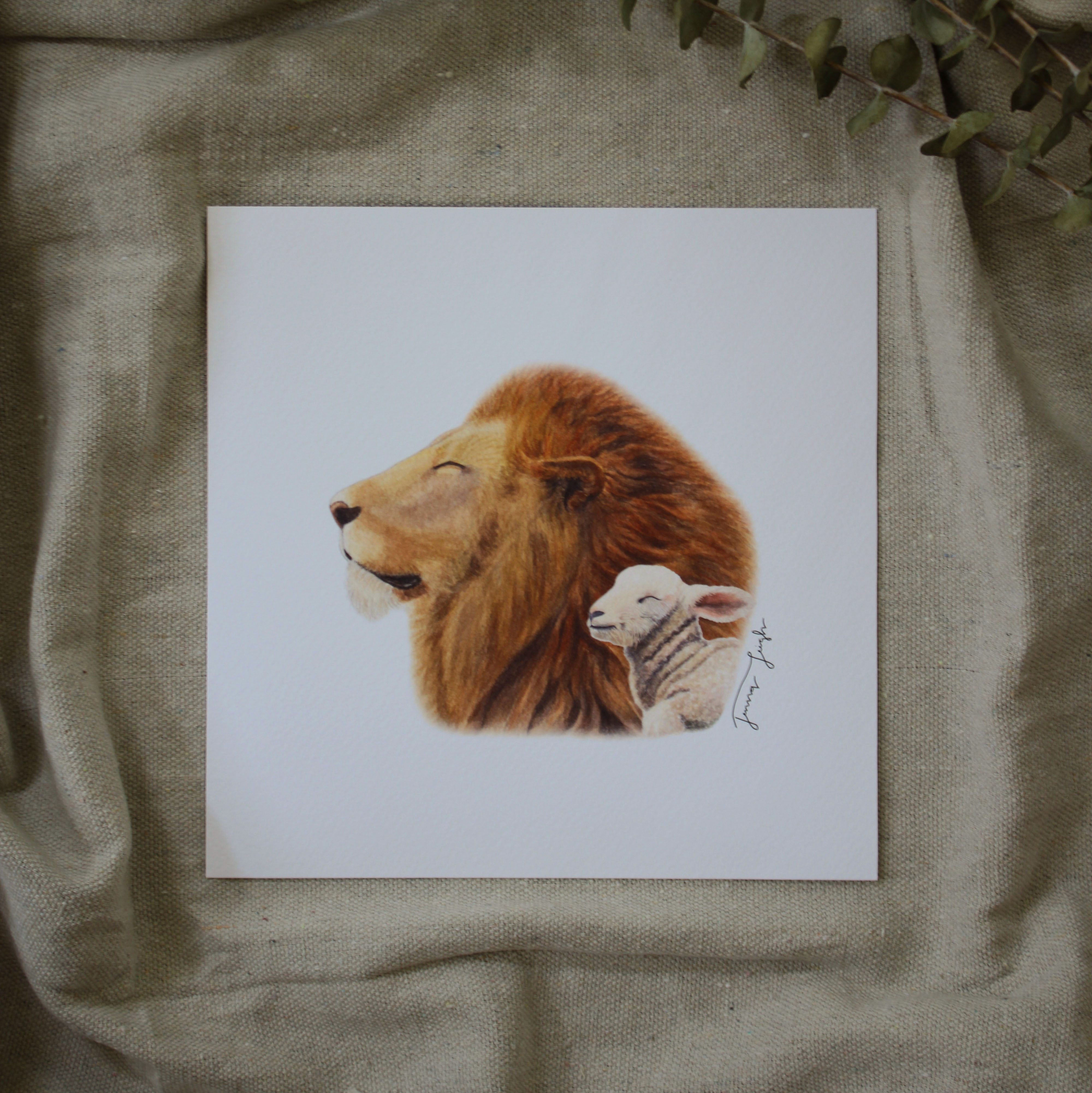
There is beauty in allegory. We love Aslan, not just because he is a well-written, dynamic character—which he is—but because he reminds us of Someone else. We empathize with Peter and Susan and Edmund and Lucy, because in many ways they remind us of ourselves. And when Aslan takes Edmund’s place on the Stone Table, our eyes are filled with tears, because we remember that we are the traitors who require atonement, in whose place Someone else endured death and pain.
Jesus Himself seemed to like allegory. His teachings are full of parables and puzzles, of one seemingly mundane thing representing some deeper spiritual truth. What is the kingdom of heaven like? It is like a mustard seed, like a treasure in a field, like a net full of fish (Matt. 13). How does God rejoice over each sinner who repents? He rejoices like a father running to his prodigal son, embracing the one he had lost and throwing a great feast to celebrate his return (Luke 15). What is persistent prayer like? It is like a widow refusing to leave the judge alone until he gave her justice (Luke 18).
Revelation also speaks to us in pictures and scenes beyond our understanding. John sees beasts, dragons, stars, woes. We are filled with alternating waves of terror, awe, joy, and reverent worship as we ponder what is, what was, and what is to come.
But why? Why are these stories so poignant? Why do they seem to reach a place in our hearts that is impenetrable by cold, hard fact?
I think the plain answer is that it is the way God designed us. After all, He is the Master Storyteller. He loves beauty. He made it. And he made us to love it, too.
But there may be a little more to the story, pun intended. Jesus spoke His parables in part to keep the hidden wisdom from those who had hardened their hearts against Him (Luke 8). Do we delight in these mysteries because we are His, because we have already received Him? Are they a gift to us, like He speaks of in Isaiah 45:3: “I will give you the treasures of darkness and the hoards in secret places, that you may know that it is I, the Lord, the God of Israel, who call you by your name”?
In his book Beauty Will Save the World, Brian Zahnd speaks to the power of metaphor to penetrate our hearts with the Gospel:
“Metaphors give us a concrete way of imagining and communicating what otherwise may remain purely abstract, and abstract ideas have a hard time taking root in our life.” p. 177
He also points out that the Old Testament prophets, such as Isaiah, Jeremiah, Ezekiel, etc., loved metaphors. They used common images—lions, lambs, branches, rivers of water—to stimulate the imaginations of their hearers as they shared messages from the Lord. As Zahnd puts it, the right metaphor “unlocks our imagination” (p. 178).
1 Cor. 13:12 comes to mind: “For now we see in a mirror dimly, but then face to face. Now I know in part; then I shall know fully, even as I have been fully known.” Do allegory and metaphor touch our hearts so well simply because we cannot fully grasp the weight of these eternal truths with our finite minds? Are they, in essence, too terrible and wonderful for us to behold as we are?
C.S. Lewis wrote The Great Divorce as an imaginative picture of heaven and hell. If you haven’t yet read it, you should. Anyway, in it a bus full of people travels to “Heaven,” and the passengers are each given the opportunity to stay, to go “further up and further in.” However, many turn back, each for different reasons, somehow repulsed by what they find there. For Heaven is made of sterner stuff than what they were used to. Far from being a dreamlike reality—a floaty, airy place of no substance—Heaven is intensely more real than Earth. The grass is so solid and hard that it hurts their feet, and the water is firm enough to walk on. Given enough time, though, if they stay, they will themselves become solid enough to adjust to their surroundings.
Jesus said, “I still have many things to say to you, but you cannot bear them now.” (John 16:12). I wonder what kinds of things He is eagerly awaiting to tell us once we have finally entered His eternal kingdom. What marvels will we behold, in the light of which all earthly beauties, even the most breathtaking landscapes, will be dull, colorless, and completely incomparable? All of the New Creation will be illuminated with the full brilliance of God’s glory.
Can you fathom that? I can’t.
Allegory reaches our hearts in ways we cannot understand. Our spirits resonate with the beauty and truth hidden in stories that echo the One Great Story, of which we are an infinitesimally small part, which is drawing toward its momentous The End.
Or is it only the beginning?


 Jenna Leigh Design Co.
Leave a comment