Whew. It’s been a full semester.
To be fully transparent, I jumped into the semester late, back in February, two weeks after having abdominal surgery.
After that, it was full steam ahead: classes, assignments, and working part-time, all while recovering both physically and mentally from an (unexpected) intense and emotionally draining three months of doctor visits and medical procedures.
Sounds fun, right?!
In all seriousness, I have to give thanks to God for His immense provision and faithfulness. His grace was fully sufficient for me this semester.
Though it wasn’t easy, He always gave me what I needed, and I “lacked nothing.”
Walk with me back through the semester as I celebrate His goodness and all that I have learned about myself and my creative practice:
End-of-Semester Reflection
Charcoal Portraits
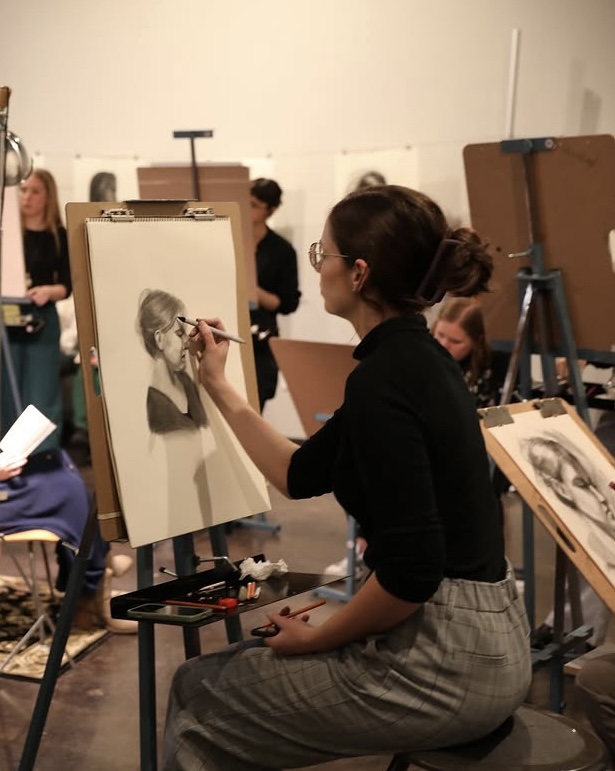
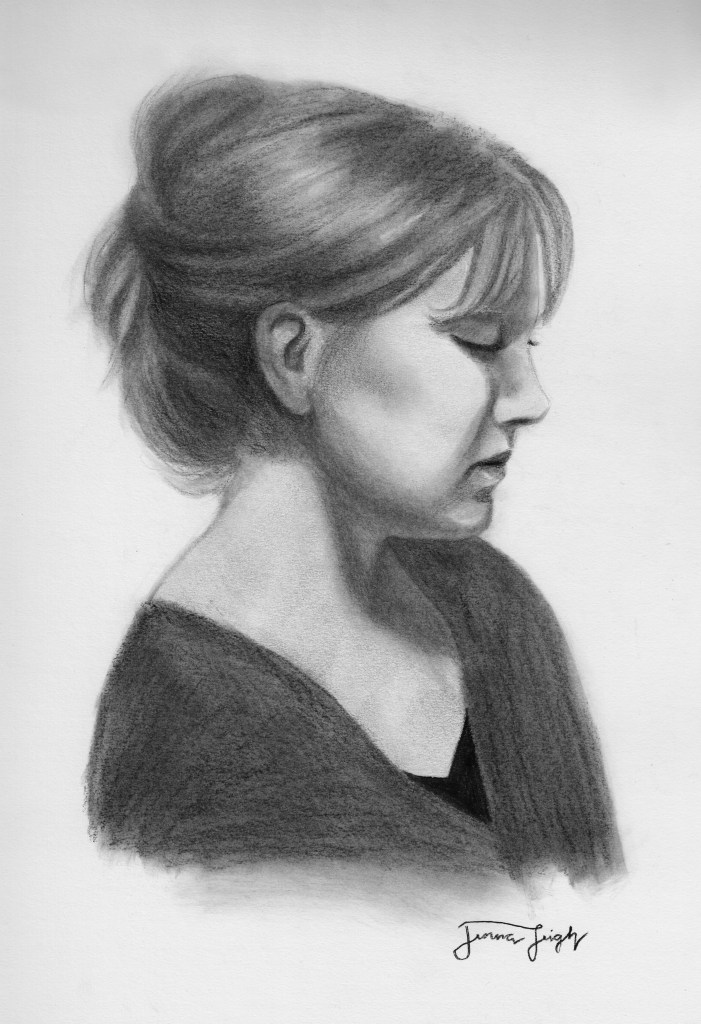
Let’s take a little journey back to the first several weeks of Life Drawing class, in which we drew charcoal portraits from life. Remember those?
This was my favorite segment of the class, mainly because I love portraiture (which, if you’ve read my previous post What’s in a Face?, you already know!) There’s something sacred about drawing people, all the more so when drawing them from life.
Not to say that this portion of the class was a breeze for me. In fact, it was rather difficult and, at times, a bit humbling. I was forced to face a number of challenges, including (but not limited to) the following:
- my tendency to be too tight & rigid with my work
- difficulty capturing the softness of forms & transitions
- my tendency to be too light/low contrast in value
Nevertheless, by the time we completed our last charcoal portrait (during our live session in the gallery), I noticed a definite improvement in these areas, and I was pleased with my progress.
Wildlife Sketching
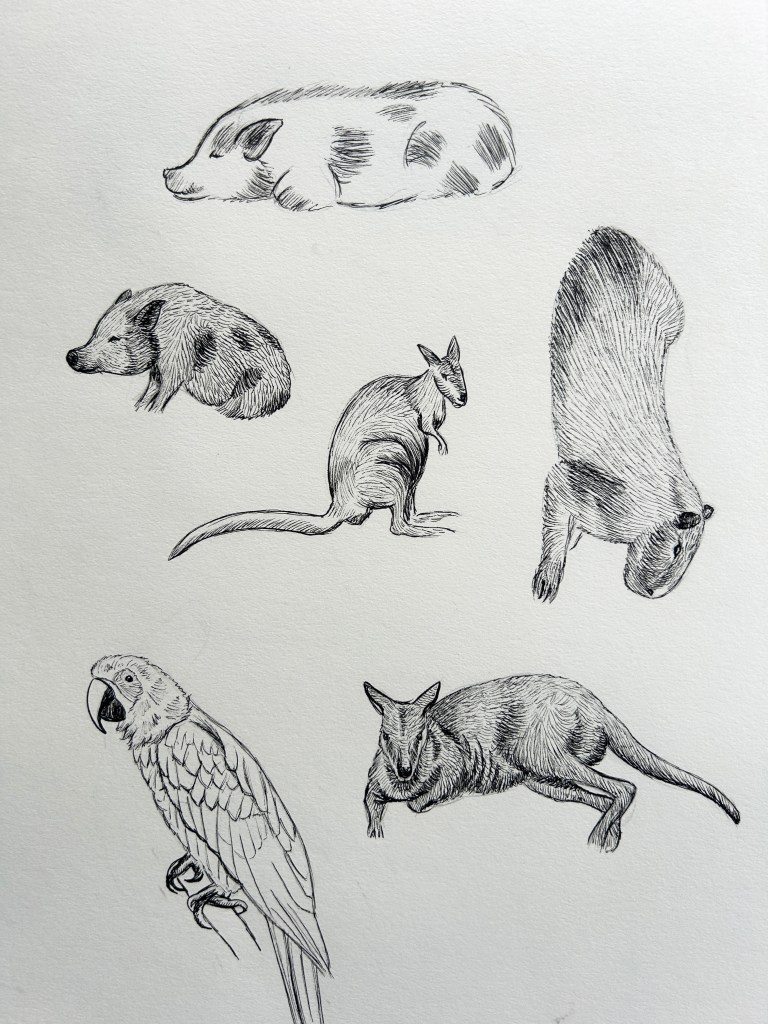
We only spent a brief two weeks on this segment, which was enough to discover just how challenging it is to attempt drawing live animals!
(To be honest, most of the time I drew them while they were resting or sitting/lying still…that still counts though, right?)
Our visits to the Aquazoo were a unique adventure, and definitely a new experience for me. Because we were able to roam as we pleased, choosing both our medium and our subjects, this was a low-stress, low-stakes assignment, and we had the opportunity to sketch a variety of mammals, reptiles, amphibians, and fish.
For my homework assignments, I drew two family pets, who more or less cooperated with my attempts to capture them in different poses.
All in all, wildlife sketching was a relaxed and well-timed break between the intensity of life drawing and plein air painting.
Urban Sketching
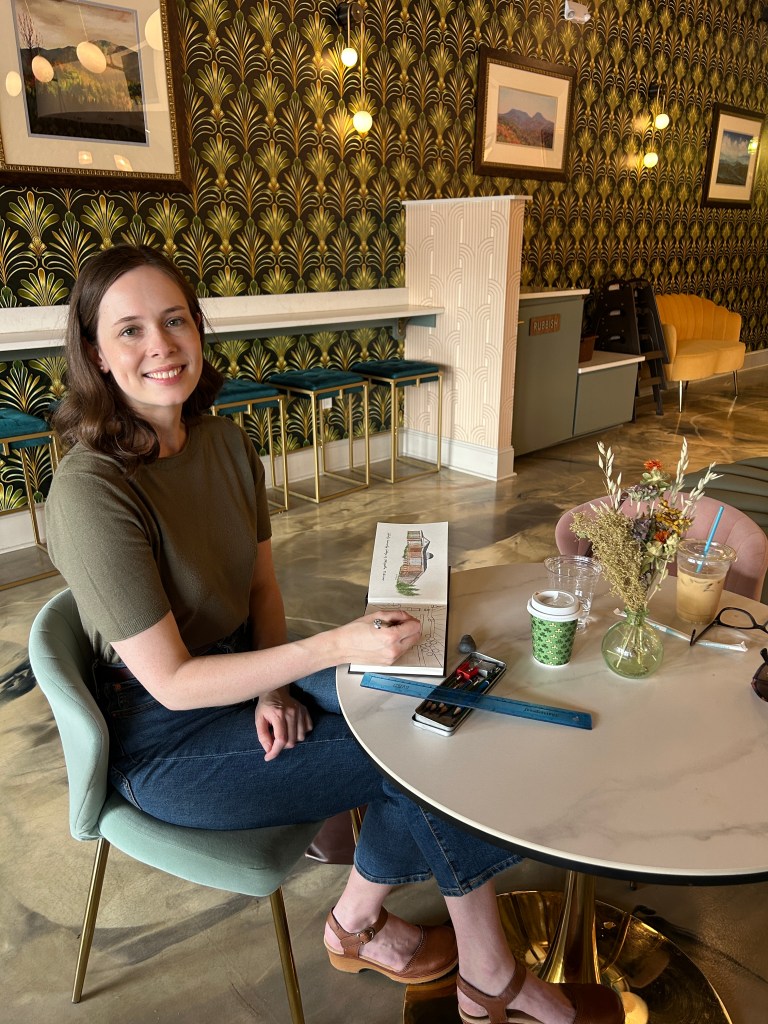
On to urban sketching.
You’d think this would have been relaxed too, right?
What’s so difficult about sketching architecture?
I thought this portion of the class would be a piece of cake. I’ve painted numerous house portraits, and the nice thing about buildings is that they stay still.
But something about the combination of time restraints, unpredictable weather (we had several rainy days during those weeks), and the challenge of capturing accurate perspective sent me into panic mode.
I can feel the stress returning now even as I write about it.
(It’s over, Jennie. You survived.)
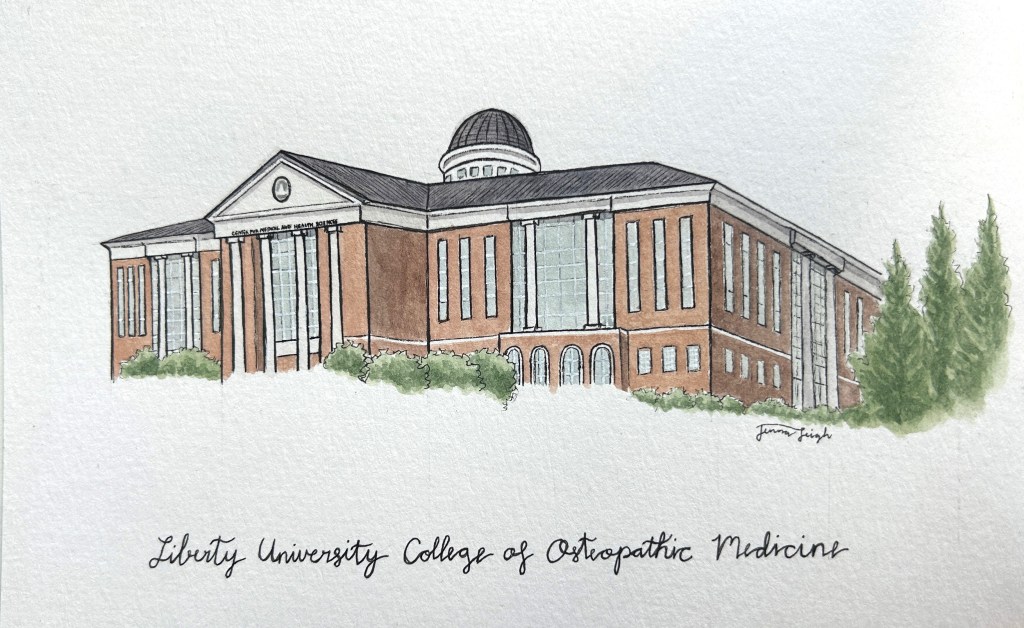
Still, a few of my urban sketches are probably some of my nicest work from the class.
Plein Air Painting
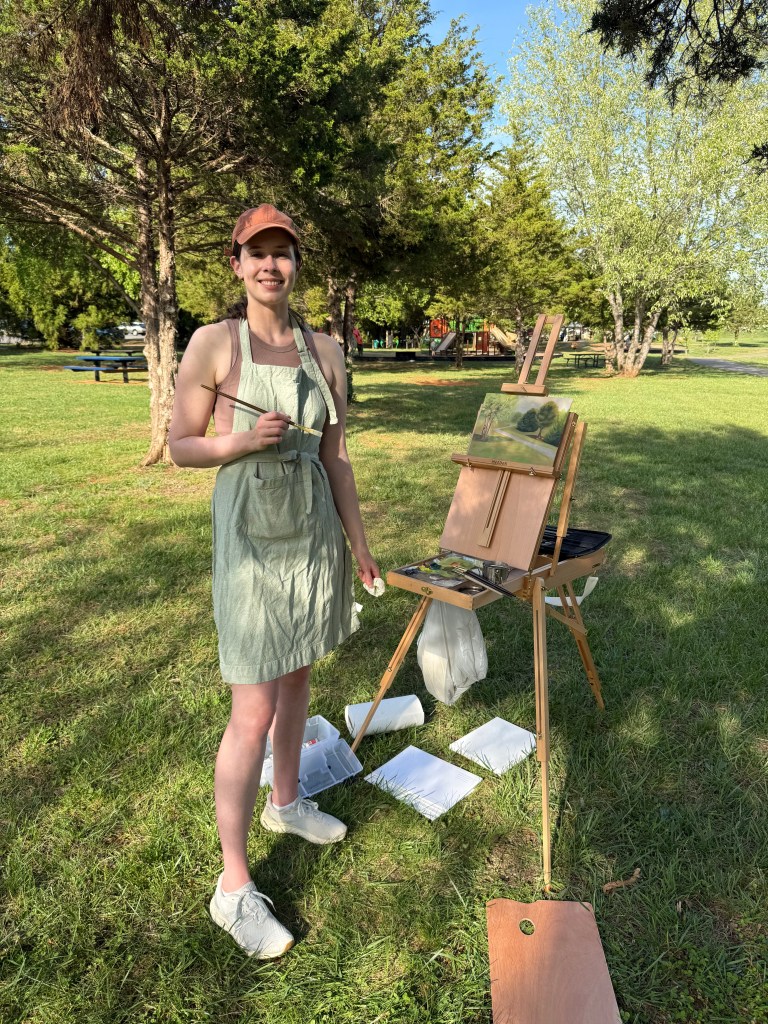
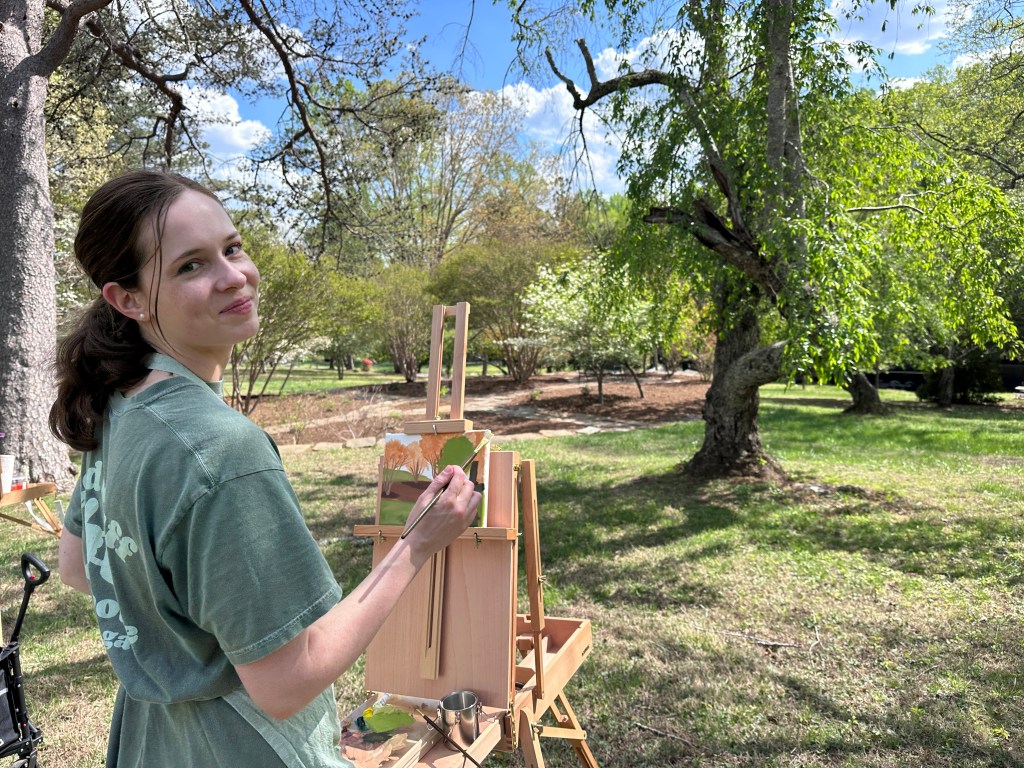
Ah, the home stretch. I had been intimidated by the thought of plein air painting, especially in oils, which are not my medium of choice. I was determined, however, to challenge myself by using oils rather than watercolor.
Somehow, though, this ended up being one of the more relaxing segments of our class. We were surrounded by grass and trees, mixing shades of green on our palettes, watching and being watched by passersby in parks and gardens, who would often come up to ooh and ah over our work.
And we got to be outside in spring, glorious spring!
This was also the most stretching segment of class for me. Here are a few ways in which I grew by practicing plein air painting:
- beginning with an underpainting that defines composition, perspective, and areas of light and shadow
- keeping paint thin, especially in first layers
- working from dark values to light
- simplifying complex details
- enhancing atmospheric perspective and warm light/cool shadow
- describing form with value and color transitions
- placing confident strokes
- choosing what to include in composition, rather than trying to include everything
- incorporating a variety of textures/techniques
I had come to a bit of a stalemate with oil painting, but I’m happy to report than I’ve been encouraged to keep practicing this versatile medium. It may not feel as familiar to me as watercolor (and it may be a good deal messier), but the results are so rewarding.
Moving Forward
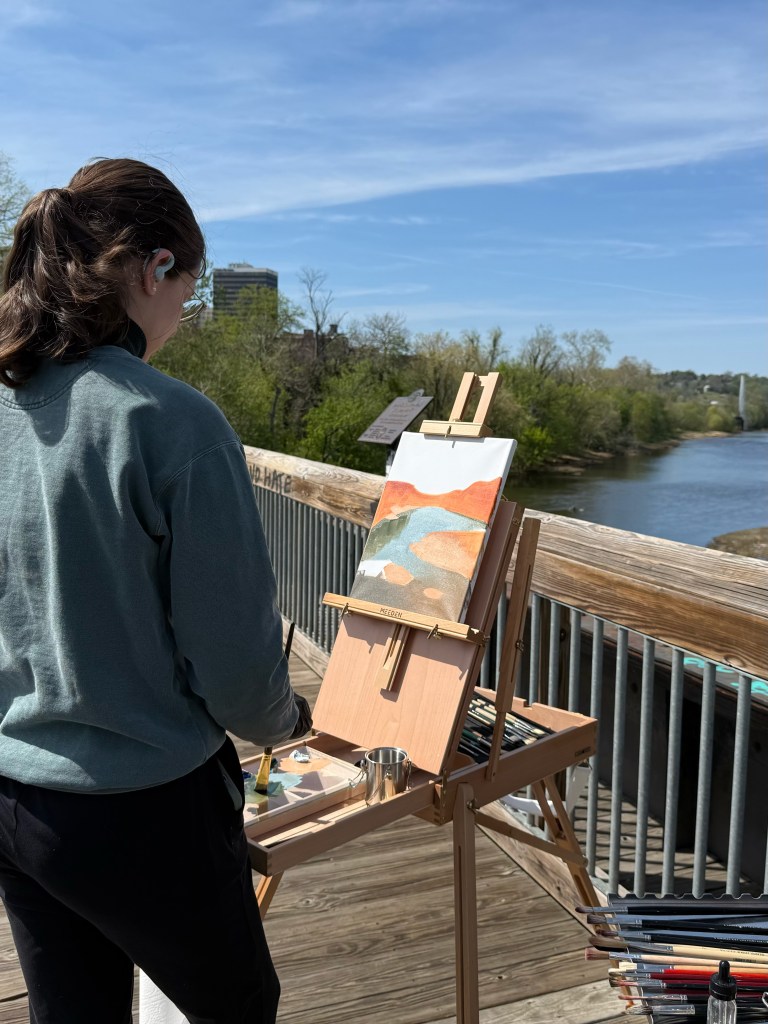
So, what’s next? You’ve heard from me almost every week this semester as I shared the trials and toils of my journey through Life Drawing class.
Summer’s coming, and that means no classes.
How will I keep challenging myself to strengthen my skills, experiment with different media and methods, and integrate all that I’ve learned this semester in my own creative practice, without the added pressure of deadlines and grades?
I’m so glad you asked.
Here are my personal artistic goals for the summer:
- continue practicing oil painting, with at least 1 small painting a month
- reassess and prepare my work for upcoming markets later in the year
- produce a new piece or collection of pieces to sell each season
I think these are a reasonable and feasible list of goals, since I will also be busy with work/other plans for the summer.
But if I’ve learned anything—anything—(and I’ve learned a lot)—from this class, it’s that improving your skills requires dedication, perseverance, and lots of hard work.
Success—or even progress—does not come by accident. It is the result of hours and days spent in the studio, studying the masters, refining your work, learning from peers and instructors.
Starting with a blank piece of paper or a canvas, again and again and again.
It is a lifetime’s commitment, a dedicated stewardship of my work for the glory of God.
And I feel so, so grateful and blessed that this is what He’s called me to.
Because art is not just about entertainment, or talent, or enjoyment. It is about this holy thing called beauty, which originates from and is given to us by God, and it is so much more valuable than we know.
God cares about art. He cares about my art.
He cares about your art.
And when we create with Him, and for Him, and because of Him, I believe that He finds deep delight in our work.
We are His workmanship, after all.
So as I conclude this semester, this is what I choose to believe, to claim over my life and my calling as an artist and a child of God:
“And I am sure of this, that He who began a good work in you will bring it to completion at the day of Jesus Christ.” (Phil. 1:6)
Thank you so much for following along!

 Jenna Leigh Design Co.
Leave a comment