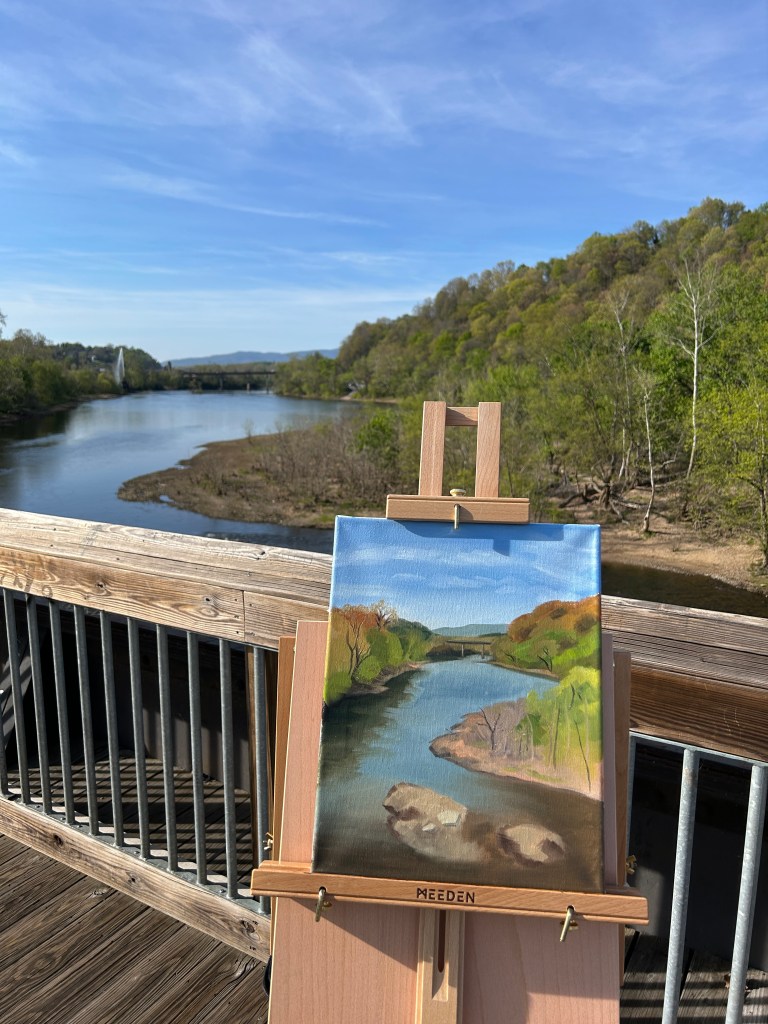
Oil paint and I have a tumultuous history. If you’ve followed along with my blog or Instagram for any length of time, you will know that watercolor has been my medium of choice for the past several years.
It’s easy to clean up, easy to set up, and easy to work with, once your brain becomes accustomed to the transparency, quality of the paint, using the paper as “white,” and lack of any ability to cover up blatant mistakes.
I know I’m in the minority on this, and I’m okay with that.
I will stand by my love for watercolor until the day I die.
Oil paintings can be beautiful, vibrant, intricate, and absolutely stunning. It’s a versatile medium, but it also has its pros and cons:
- toxicity
- messy
- takes longer to set up
- takes longer to clean up
- takes longer to mix colors
- messy
- generally more complex
- messy
- not water-soluble
- messy
Since I learned oil painting in one of my undergraduate classes, I have come back to grapple with this multifaceted medium from time to time—always learning, sometimes improving, never coming fully to a place where oils and I flow.
There’s always something about it that eludes me. I would love to produce a wonderfully expressive, textured, impressive oil painting, but somehow my style does not translate well when I make the switch from watercolor to oils. I think my brain has a hard time comprehending that you can actually paint in opaque layers and even cover up mistakes.
What?!
It’s not as if all my oil paintings are bad. They aren’t. But they are painted in my ultra-tight, precise, overly-refined style, and something is always simply not there. Try as I might, I have a hard time loosening up.
In preparation for this class, I finally read my copy of Color and Light, by James Gurney, cover-to-cover. His masterful techniques and explanations of lighting, color, and composition in a plein air setting were immensely helpful. He makes it look so easy!! Simplifying forms, interpreting what you see, laying down major blocks of color, light, shadow, and even some detail in the matter of just a few hours—
I felt more ready for plein air painting than I ever had in my life thus far.
(I don’t know how much that statement is worth, but there it is.)
All that to say: I started working with oils again this week, as we dove into plein air painting for the last portion of our graduate Life Drawing class.
How did it go, you ask?
Let me tell you.
Painting Process
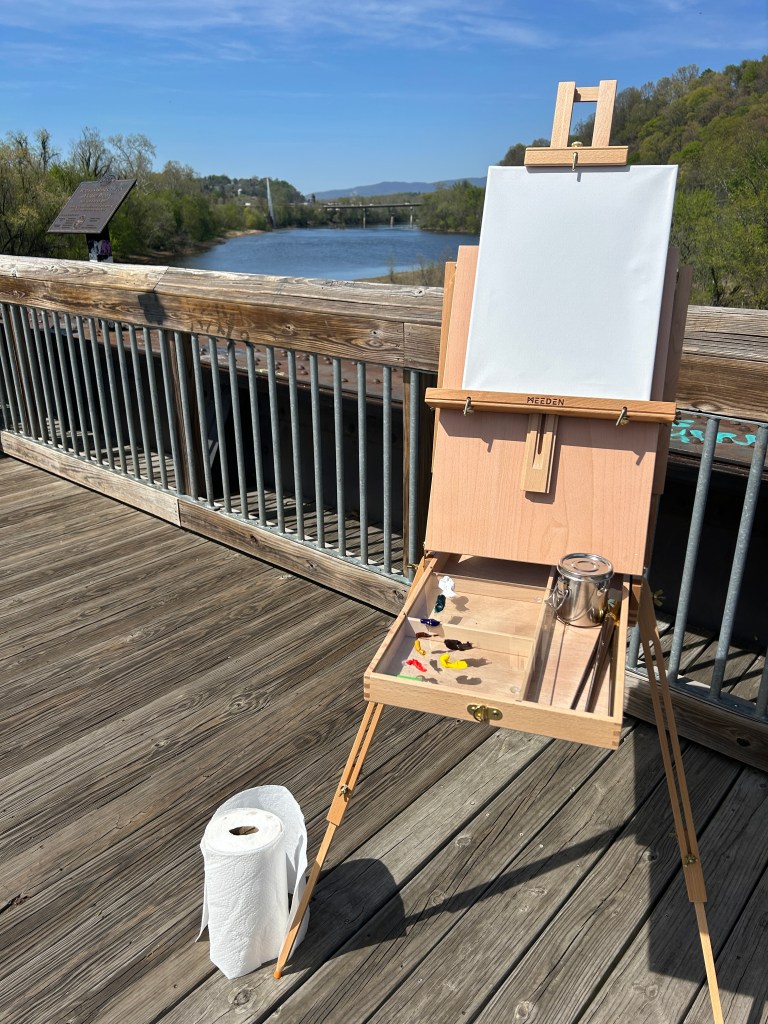
Here’s my setup when I was ready to start painting. My friend and I decided to buddy up and do our painting sessions together, so we decided on a location, packed up our supplies in a wagon, and headed out down the Blackwater Trail on Percival’s Island. We didn’t have an exact spot in mind and ended up right on the bridge, looking out over the water. It was a clear, cool, sunny day without too much wind—perfect for plein air.
This is what I remembered to bring:
- oil paint tubes
- brushes
- paper towels
- easel
- airtight mineral spirits container
- glass palette
- apron (if needed)
- canvas
- piece of glad wrap for sealing wet palette
- sunblock
- headphones for music
And this is what I would like to remember next time:
- latex gloves (it’s tough when you get paint all over your hands and have no way to wash it off with dish soap and water. my friend gave me a pair, but they very quickly got quite sweaty!)
- plastic bag for trash (thankfully, my painting buddy brought one!)
Otherwise, I felt pretty well-prepared and happy with my setup. I had everything I needed, and now the only thing left was to just start painting…
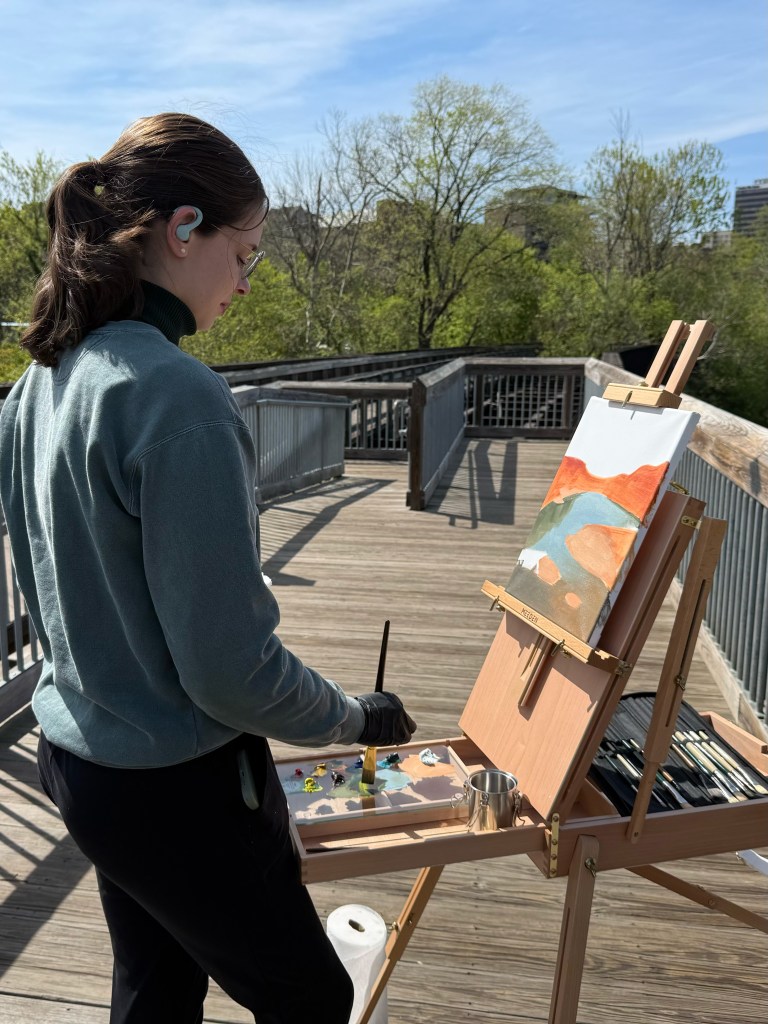
To begin, I blocked in major masses with a burnt sienna underpainting. I found it easy to decide on a composition, since the trees on either side of the water provided a perfect framing of the scene and the far bridge made a clear point of interest, with some nice aerial perspective in the distant mountains.
For once, I felt relaxed and at ease as I continued working. I was in the zone, music playing in my ears, sun on my back, brush in hand.
The oils and I flowed!
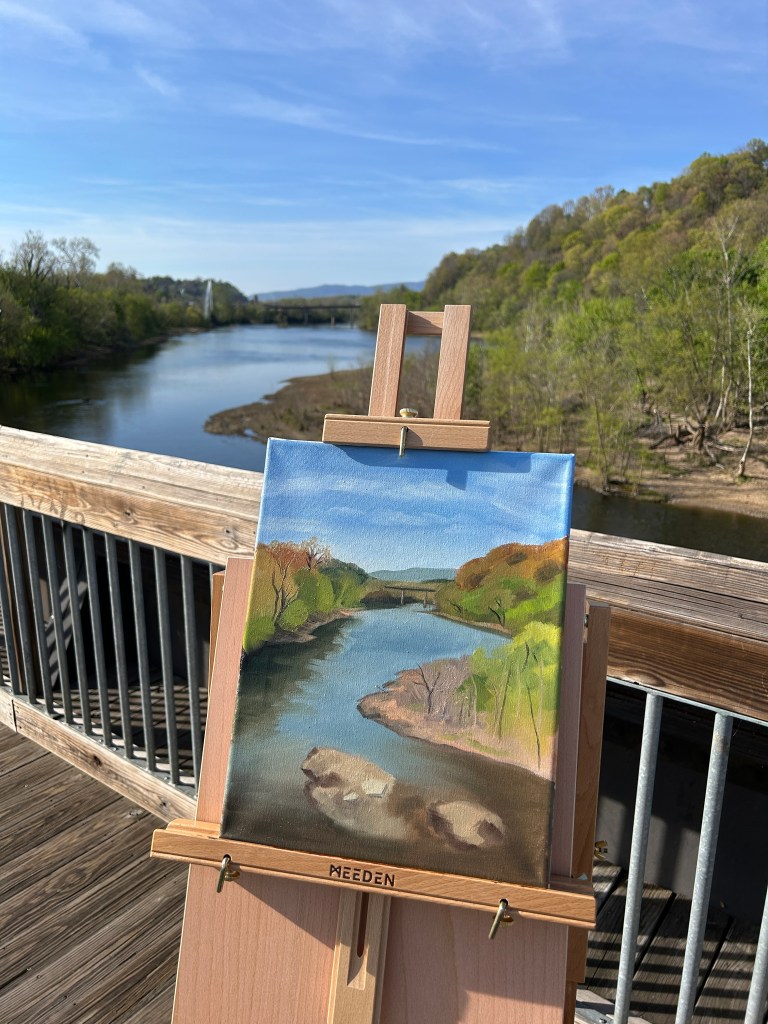
Here is the final result of my painting session:
Reflection
Challenges I encountered while working outside:
- gnats like to die in your wet paint
- it can get pretty hot…
- transporting the wet painting and palette is a feat
- French easels are heavy!
Of course, the purpose of this week’s session was to develop a workable system and setup for plein air painting. I did not come out of it with a fully “finished” or refined work, but I did come out with something I am proud of.
Though I have a long way to go when it comes to oil painting, I felt that I was actively applying principles I had learned and techniques I have observed, both from Color and Light and from the works of other skilled oil painters.
To be honest, I have been nervous about this segment of our class for quite awhile.
But now I feel more confident, ready to move forward—not in the absence of mistakes, and not in any semblance of perfection.
But, Lord willing, in progress.
Stay tuned for more!



Leave a Reply